
1-port CAN Programmable PCI-104 Module


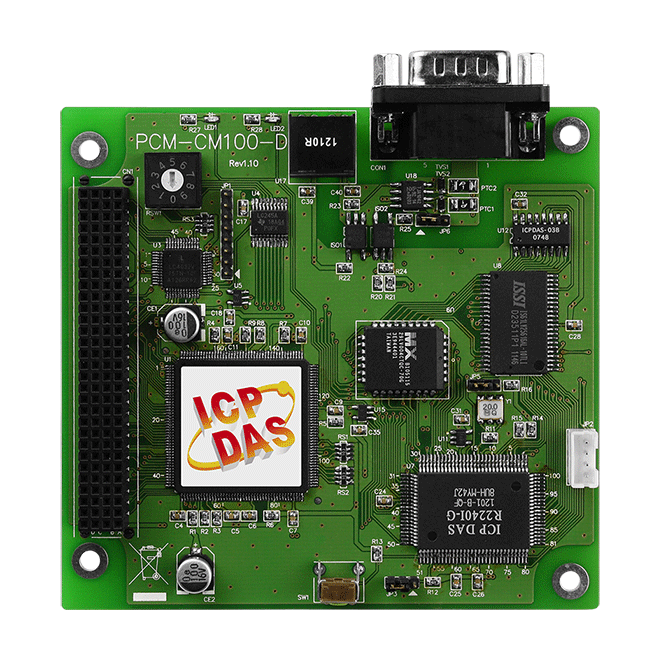
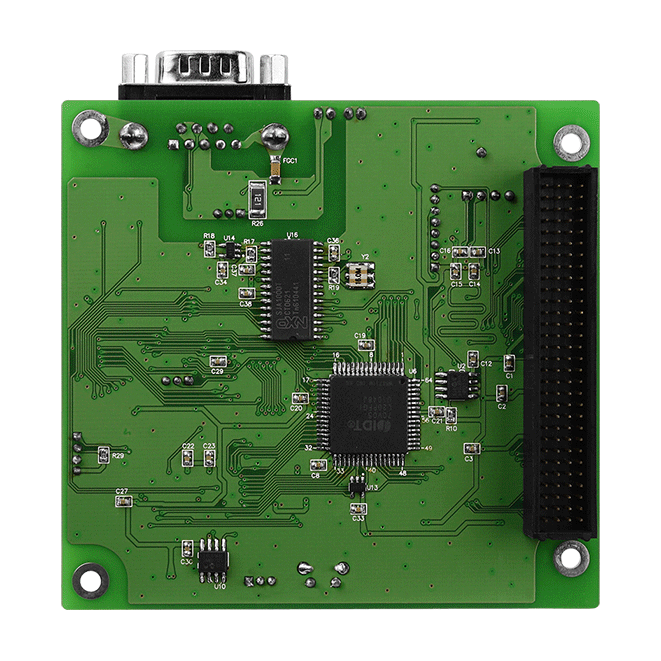
Features
- PCI-104 compliant
- Compatible with CAN specification 2.0 part A and B
- Fully compatible with the ISO 11898-2 standard
- Support several kinds of baud rate from 10 kbps ~ 1 Mbps
- 2500 Vrms photocoupler isolation on the CAN side
- Built-in jumper for 120 Ω terminal resistor of CAN bus
- 3 kV galvanic isolation
- 80186, 80MHz CPU inside
- Allow users to program their special firmware
- Timestamp with at least ±1ms precision


Introduction
The CAN (Controller Area Network) is a serial communication protocol, and efficiently supports distributed real-time control with a very high level of security. It is an especially suited for networking "intelligent" devices as well as sensors and actuators within a system or sub-system. In CAN networks, there is no addressing of subscribers or stations in the conventional sense, but instead prioritized messages are transmitted.
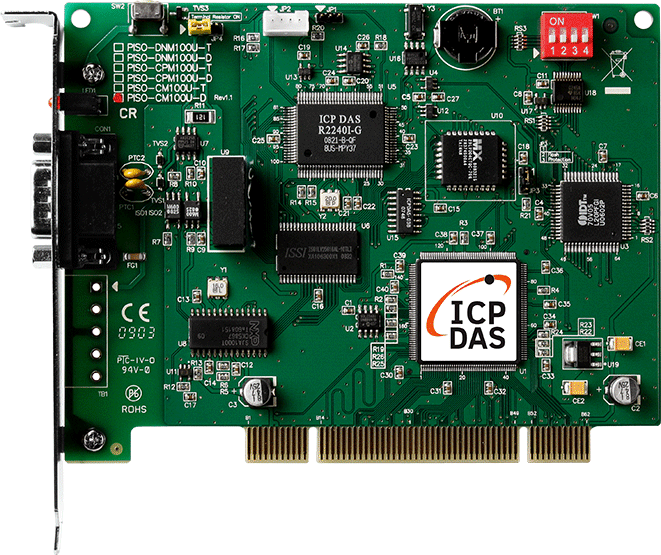
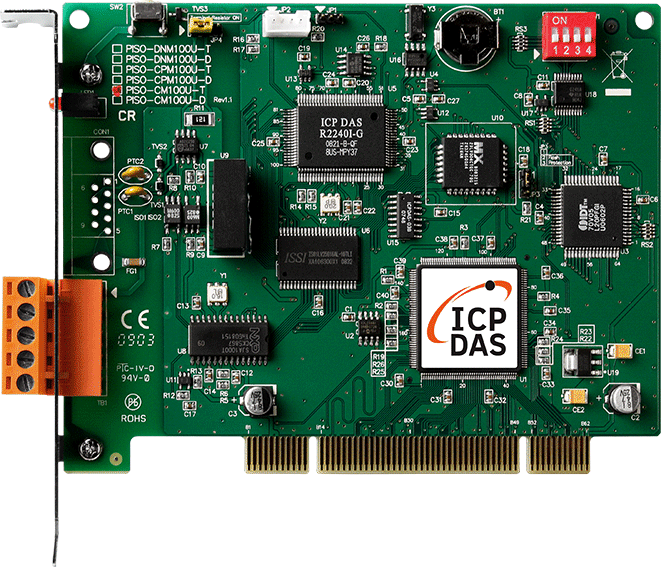
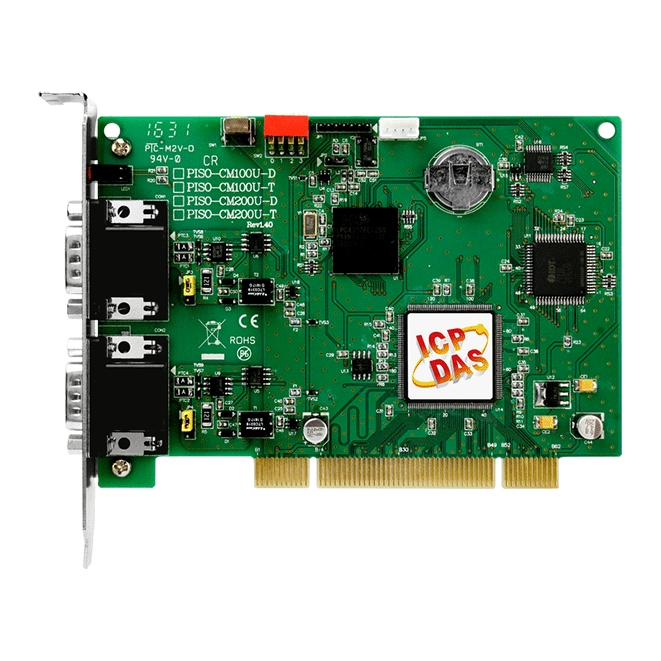
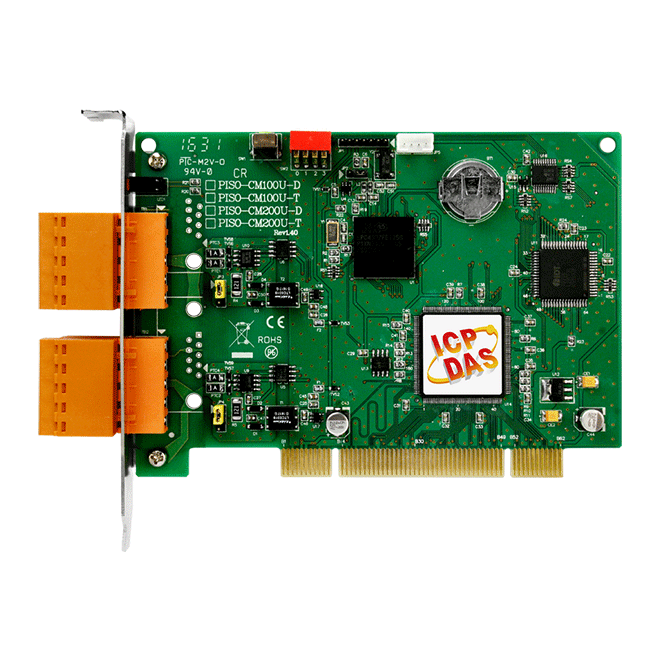
ICP DAS provides an open architecture platform for PCM-CM100-D. The PCM-CM100-D represents a very powerful and economic solution of an active CAN board with one CAN channels, covering a wide range of CAN applications. The 16-bit on-board microcontroller allows, among many other features, the filtering, preprocessing, and storage (with timestamp) of CAN messages as well as the real-time transmission of CAN messages. PCM-CM100-D also uses the new Phillips SJA1000T and Transceiver 82C250/251, which provide bus arbitration and error detection with auto correction and re-transmission function. Under the effect of the powerful microcontroller, this card can be made for one CAN controller without losing data, even in systems with a high bus load. Besides, equipped with integrated intelligence functions, the PCM-CM100-D makes it is possible to preprocess CAN data streams, thus relieving the PC of a considerable burden. As a result, real-time requirements on the PC applications are drastically reduced. Due to the state-of-the-art, it can be installed in a PCI-104 bus and supported truly “Plug & play” technology.
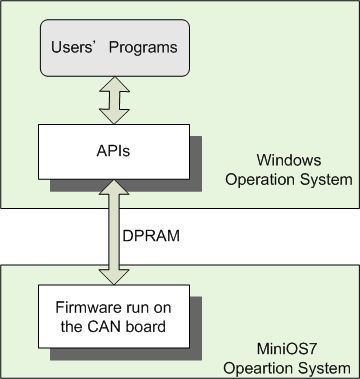
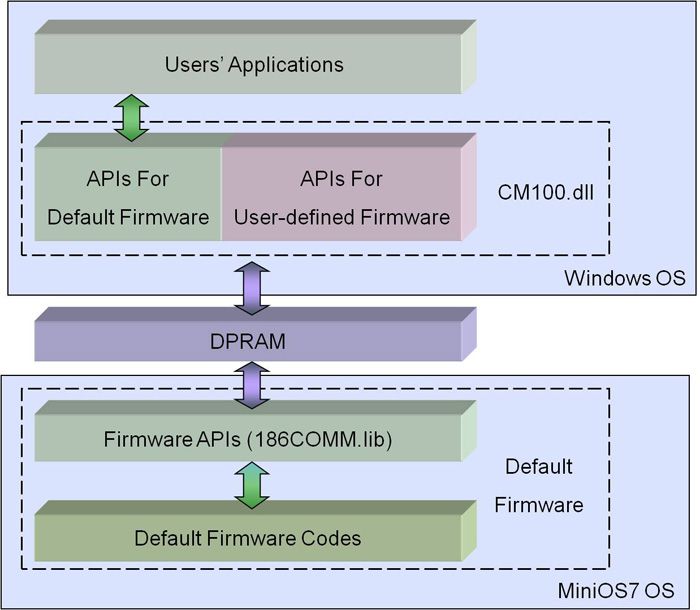
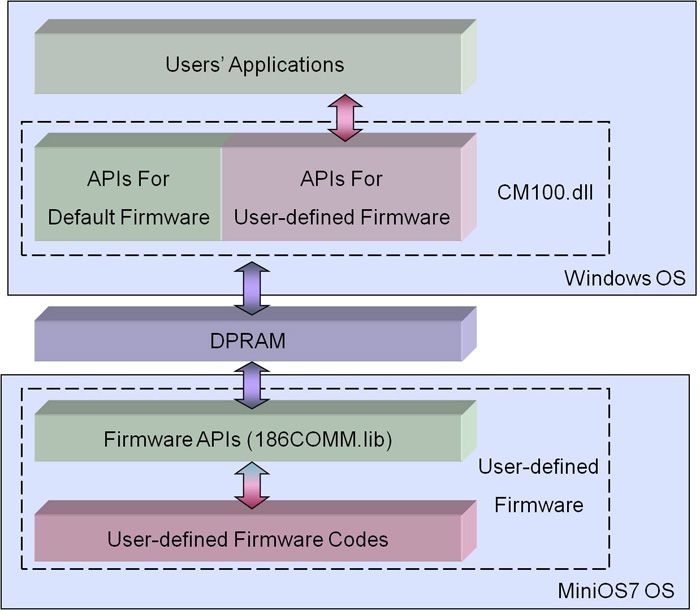
In addition, users can develop their own CAN application by using the PCM-CM100-D library. When the PCM-CM100-D is active, the data exchange between users’ application and can bus firmware is performed via the memory mapping method of the PCM-CM100-D.
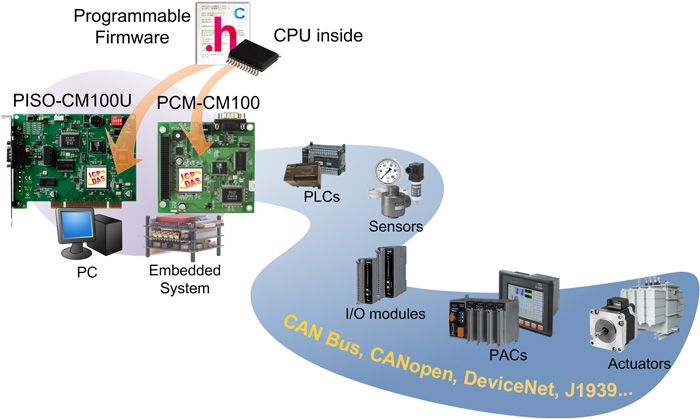
Applications

Ordering Information
| PRODUCT SERIES | DESCRIPTION | QNT. | INQUIRY |
|---|---|---|---|
Similar Products
| Software | |
|---|---|
| Driver | Windows XP/7/8/10 (32-bit/64-bit OS) |
| SDK | VB 6.0, VC++ 6.0, BCB 6.0, Delphi 4.0 |
| CPU Module | |
|---|---|
| CPU | 80186, 80 MHz or compatible |
| EEPROM | 16 KB |
| Flash | 512 KB |
| NVRAM | 31 bytes (battery backup, data valid for up to 10 years) |
| SRAM | 512 KB |
| Real Time Clock | Yes |
| LED Indicators | |
|---|---|
| Status | 1 x CAN status 1 x Operating mode |
| PC Bus | |
|---|---|
| Type | PCI-104 |
| Board No. | By DIP switch |
| CAN | |
|---|---|
| Controller | NXP SJA1000T with 16 MHz clock |
| Ports | 1 |
| Baud Rate | 10 k ~ 1 M bps |
| Isolation | 3000 VDC for DC-to-DC, 2500 Vrms for photo-couple |
| Terminal Resistor | Jumper for 120 Ω terminal resistor |
| Power | |
|---|---|
| Consumption | 400 mA @ 5 V |
| Mechanical | |
|---|---|
| Dimensions (mm) | 96 x 90( W x L) |
| Environment | |
|---|---|
| Operating Temperature | 0 ~ +60 °C |
| Storage Temperature | -20 ~ +70 °C |
| Humidity | 5 ~ 85% RH, Non-condensing |
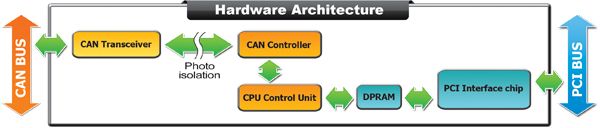
Hardware Architecture
Software Architecture
Performance Test
Test development:OS:Windows XP SP 3
CPU:Intel Core 2 Duo 2.00 GHz
RAM:512 MB
| Baud Rate(bps) | CAN 2.0 A | CAN 2.0 B |
|---|---|---|
| Frame per sec. | Frame per sec. | |
| 1000 k | 7502 | 6589 |
| 800 k | 6188 | 5258 |
| 500 k | 4097 | 3451 |
| 250 k | 2140 | 1801 |
| 125 k | 1098 | 920 |
| 50 k | 440 | 371 |
| 20 k | 176 | 148 |
| 10 k | 88 | 74 |
Note:The test result is the average value of receiving 100000 CAN messages